
For Palestinians, the sabra cactus is not the Israeli sabra — its fruit thorny outside, sweet within. It is a marker of the village that once stood there, planted to fence a home, an orchard, a boundary. Long after the house is gone, the cactus remains — sumud, perseverance, that does not ask permission to keep growing.
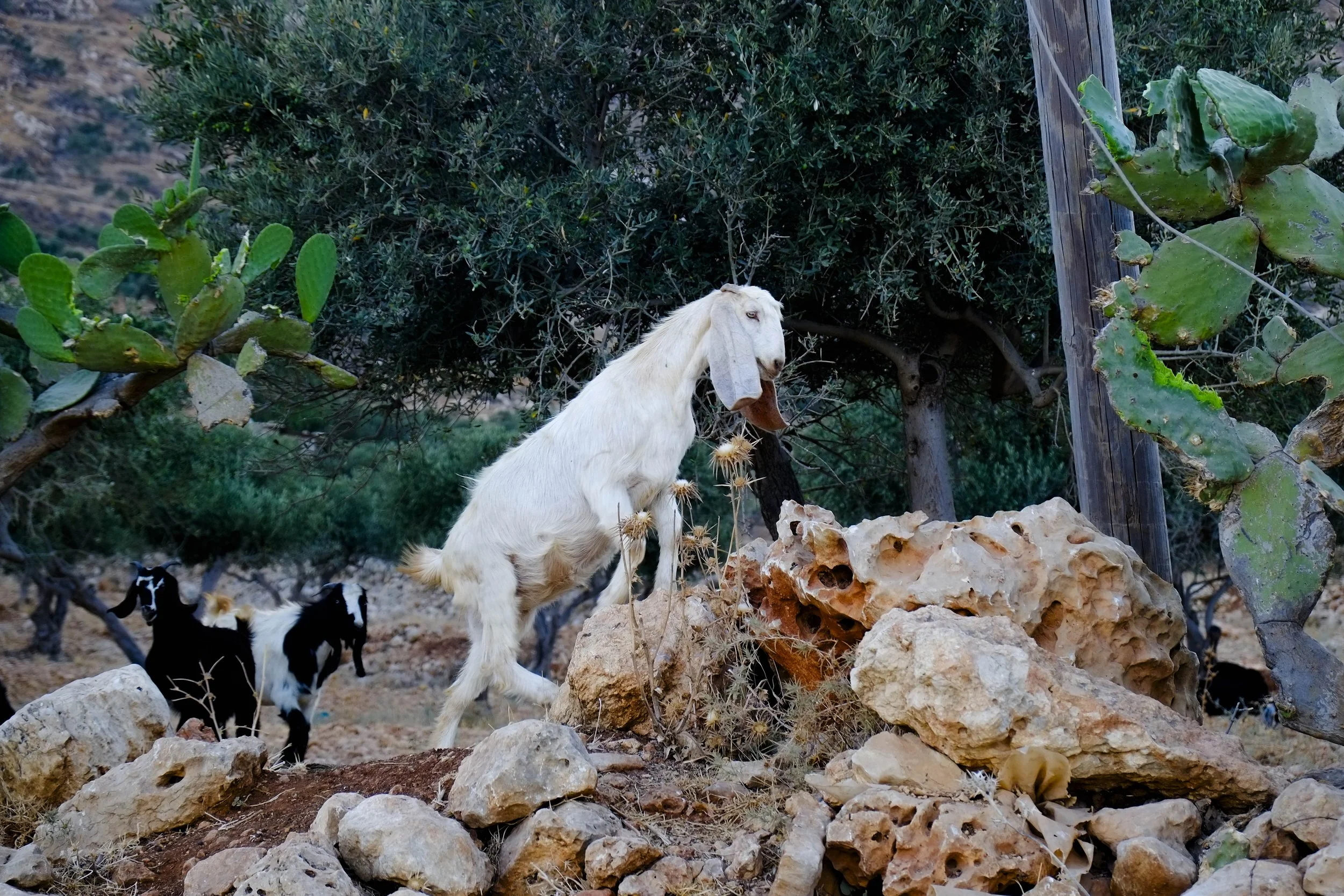
The settler boy, his sidelocks blowing in the wind, takes his goats to graze in the center of At-Tawa'il village. He looks no older than thirteen. He does not seem afraid to be alone in a Palestinian village with his flock. His outpost, at the edge of the village is growing fast, every time we come here, we see that new structures are added.
We watch the boy’s movements — from a lookout on the hill, then closer. He leads the goats into an olive grove along the village's main dirt road. The goats, on their hind legs, are feasting on the olive leaves. There are worse things they could do, so we watch, only to be sure the boy doesn't take them into a farmer's yard. Two other young settlers we spot at a distance, do not come to join him, and so, for now, we just watch.
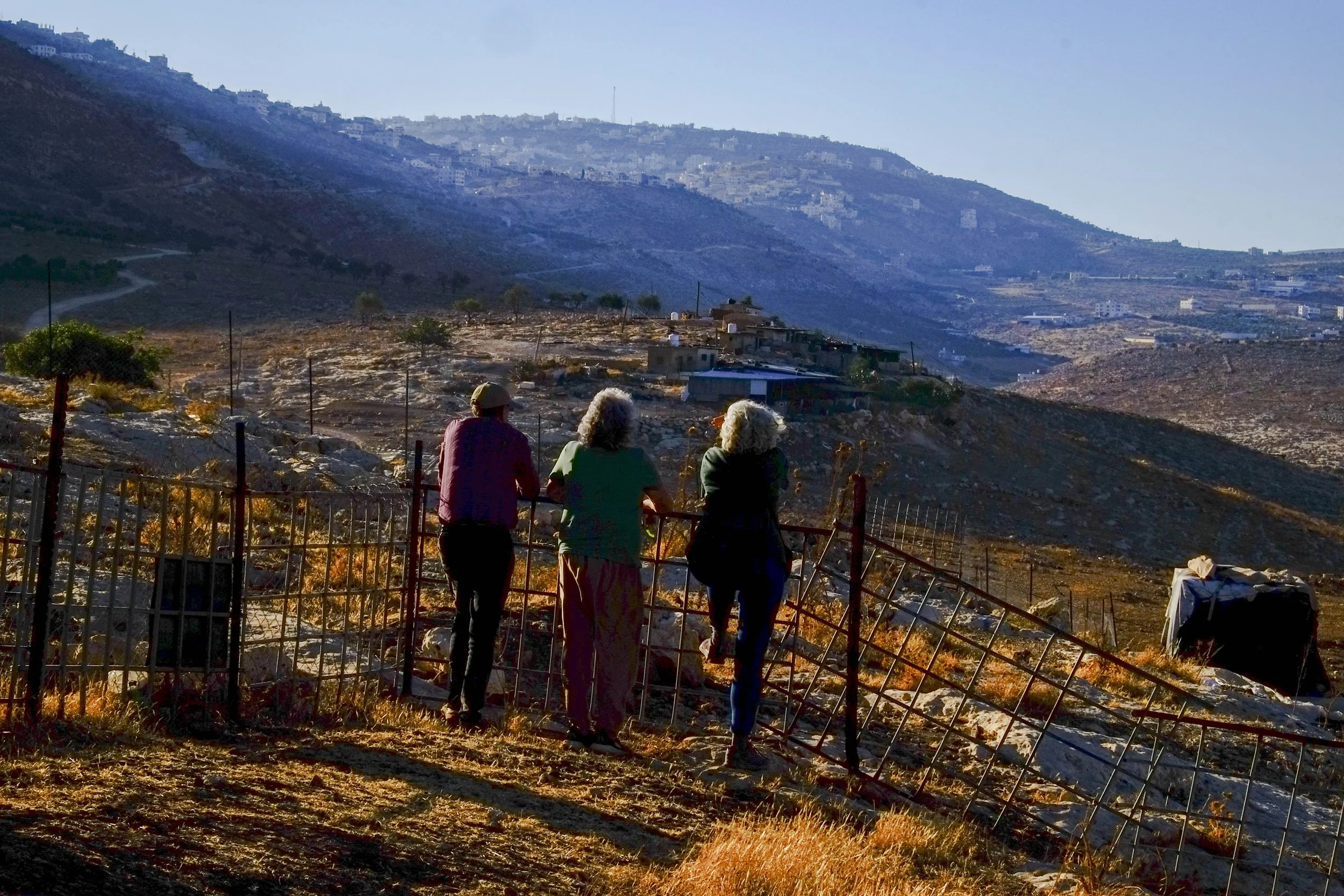
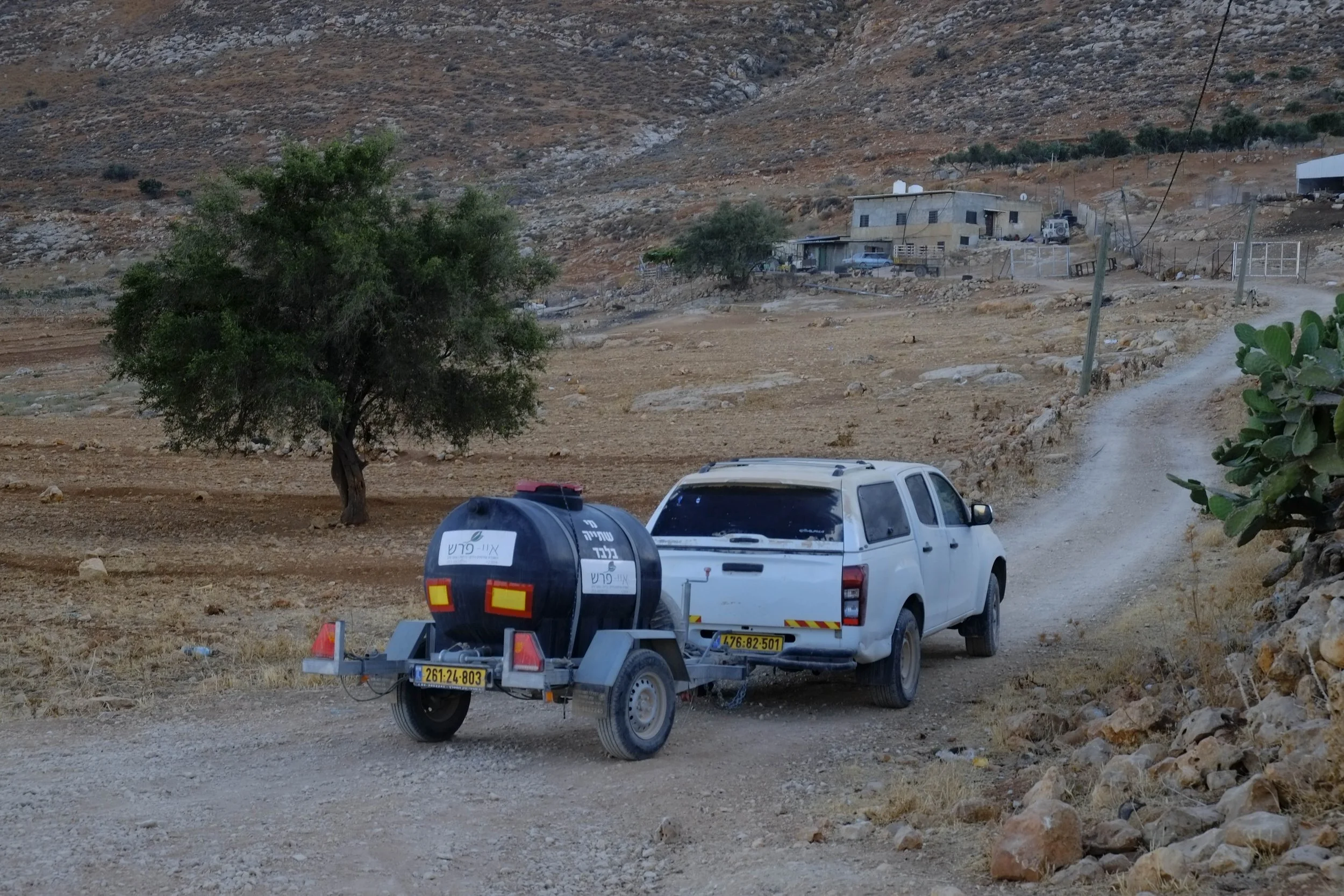
The village's waterpipes are cut by settlers again and again, until it no longer pays to fix them. Members of our group, Looking the Occupation in the Eye, haul water in on a tanker, filling cisterns and the white roof tanks.
One night, settlers viciously attacked an elderly couple not far from their outpost, only fleeing when members of our nightshift arrived. Our protective presence is necessary seven days a week, twenty-four hours a day.
When the goats have had their fill of olive leaves, the boy starts to move them out of the grove. But they stop at the wall — what's left of a hedge of sabra cactus, mostly replaced now by loose stones — and begin to eat. Not the fruit. The leaves, with their tiny spines that are annoying to human hands. The goats don't seem to mind.
They have their fill.
How long will At-Tawa'il hold out?